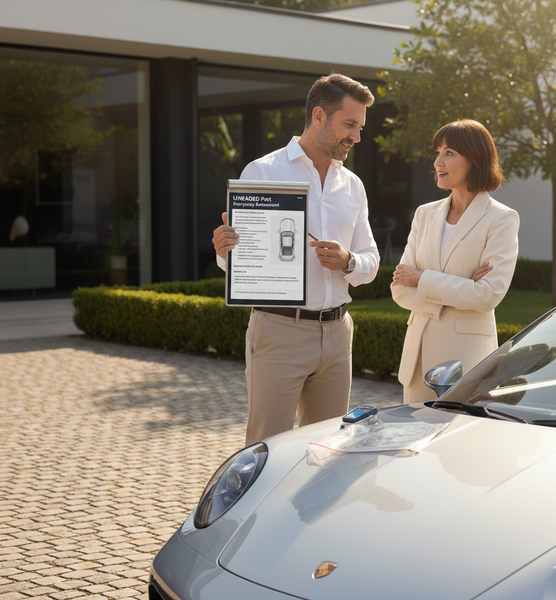

You probably saw our sandwich bag test
and part of you wondered if that was actually real.
Maybe it even raised a bit of a red flag.
Especially if you’re someone who actually stays on top of your vehicle.
But most owners were never told what actually changed.
Around 2008, paint changed.
The rules mostly didn’t.
Sounds obscure…
right up until a sandwich bag ruins your afternoon.
The other day my neighbor walked over while I was getting my mail.
He’d just gotten back from the dealership.
Oil change.Complimentary detail.
He goes:
“Think they did a decent job?”

Dr. Dave.
Board-certified physician.
Drives a BMW.
Garage-kept. Oil changes on time. Not careless.
So I handed him a sandwich bag from my kitchen.
Which, to be fair, is not what most people expect from a normal neighbor conversation.
“Try this.”
Slide your hand inside it.
Lightly run it across the paint.
He gave me that look.
You know the one.
The polite version of:
“Javier… what exactly are we doing here?”
Then he tried it.
Scratchy.
Not catastrophic.
Not dramatic.
Just… enough to quietly kill the assumption.
That’s how this starts.
Not with some giant obvious disaster.
Just a small, unexpected moment where a responsible owner
realizes:
“Huh…
that doesn’t feel like I thought it would.”
No warning light.
No dashboard notification.
No service advisor casually mentioning:
“By the way… your paint may already be developing early degradation.”
Would’ve been helpful.
So people keep doing what they were told.
Wash it.
Wax it.
Book the detail.
Which is fine…
if the paint hadn’t changed.
But it did.
And that gap between what paint needs now and what everyone told you to do?
That’s where responsible owners lose ground they don’t get back.
SELF-VERIFICATION
You can do this yourself in about 30 seconds.
No special tools. No sales pitch.
Just your hand, a sandwich bag, and an honest answer.
Grab a sandwich bag.
Put your hand inside it.
Lightly glide it across your paint.
Smooth and silent?
Good.
Rough and scratchy?
Something changed.
Most owners have no idea what.
That’s where assumptions get expensive.

THE UNFADED INTEGRITY VERIFICATION
This is where we separate:
“Looks fine…”
from:
“Actually verified.”
Because assumptions are cheap.
Data is better.
We document how your paint is actually performing — panel by panel.
Not guesswork.
Not assumptions.
Not “probably fine.”
From there you have a permanent record.
The first one your paint has ever had.
You get one of two outcomes.
STABLE — Grade A or B.
Baseline verified. On record.
DEGRADATION DETECTED —
Grade C, D, or F.
Deviation confirmed. Severity classified.
The data decides what happens next. Not us.
Think CARFAX for your paint.
BACKGROUND
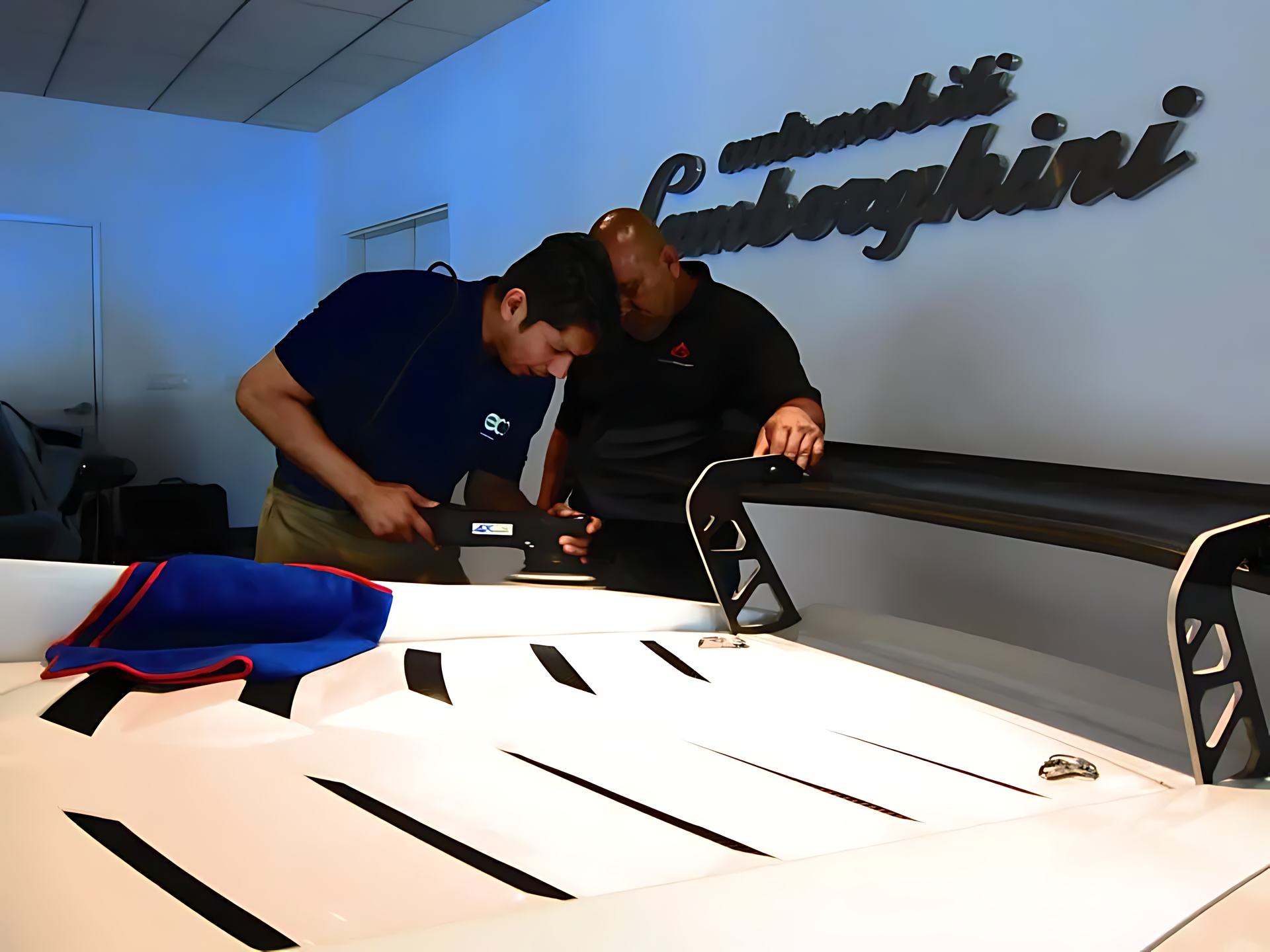
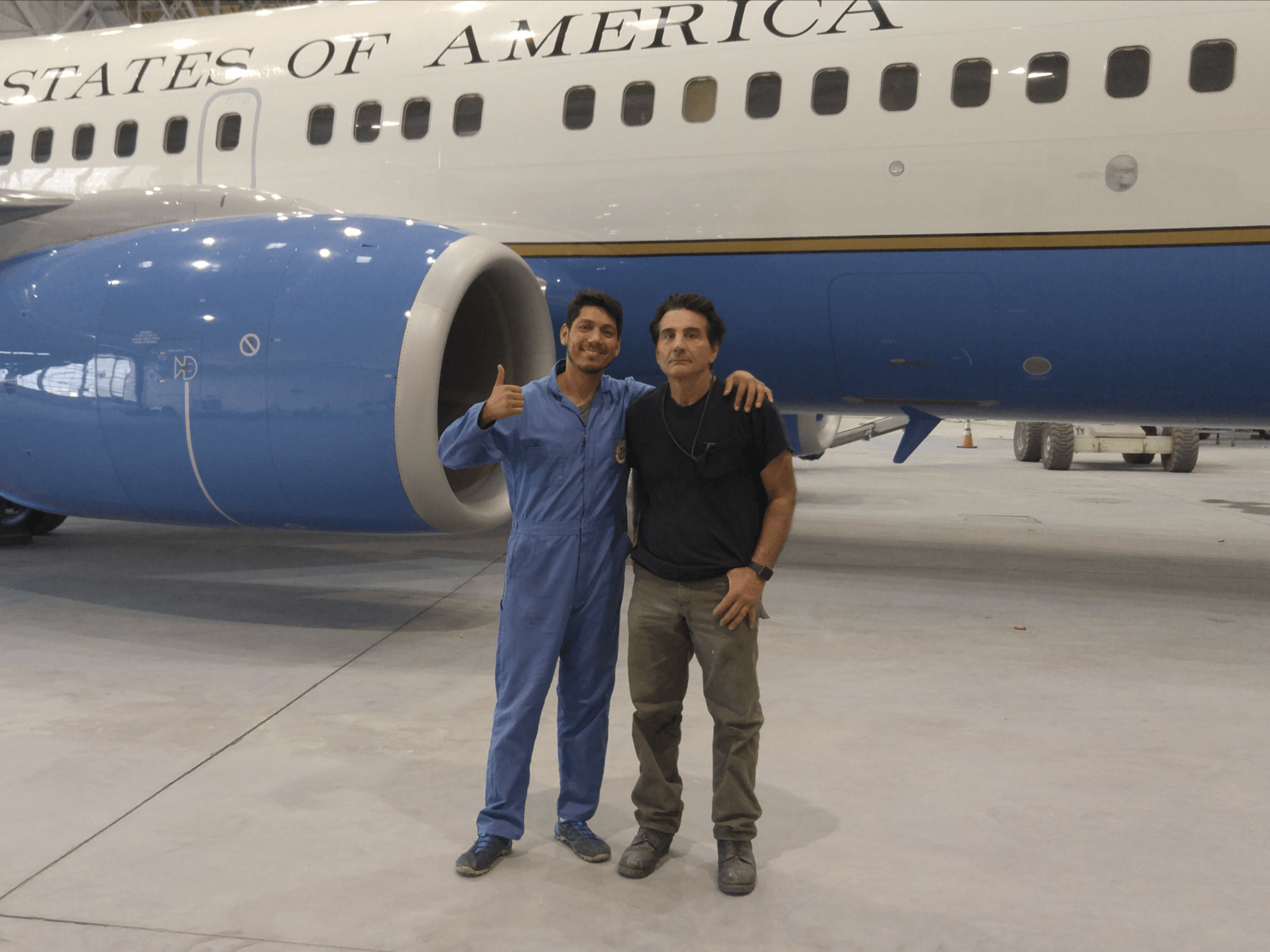
I didn’t discover this working on weekend cars.
I spent years inside facilities where 99% of people will never set foot.
Three security checkpoints just to get cleared.
Air Force One.
Beverly Hills McLaren.
Lamborghini Los Angeles.
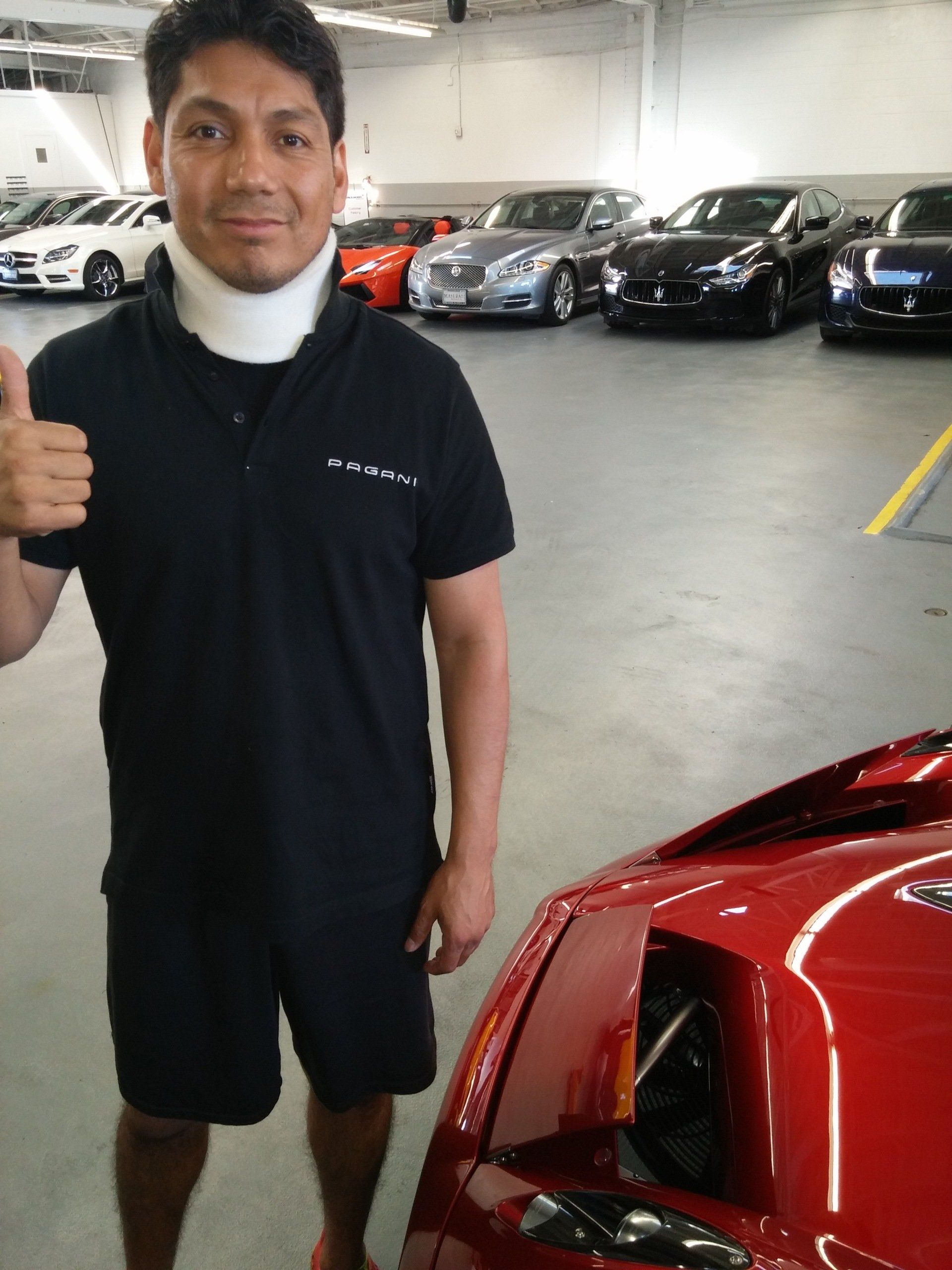
Pagani Beverly Hills.
Porsche.
Different vehicles.
Different stakes.
You get it wrong there —
it doesn’t get buffed out.
It ends careers.
Not one technician in those rooms was trained to verify whether the paint still had integrity.
That’s not a polishing problem.
That’s a verification problem nobody was solving.
PAINT INTEGRITY VERIFICATION
$197 I come to you.
$97 you come to me.
Guessing is still free.
Select a time on my personal calendar.